Coating Services and Systems
What does a metal roof coating contractor do on a Bridgeport commercial building?
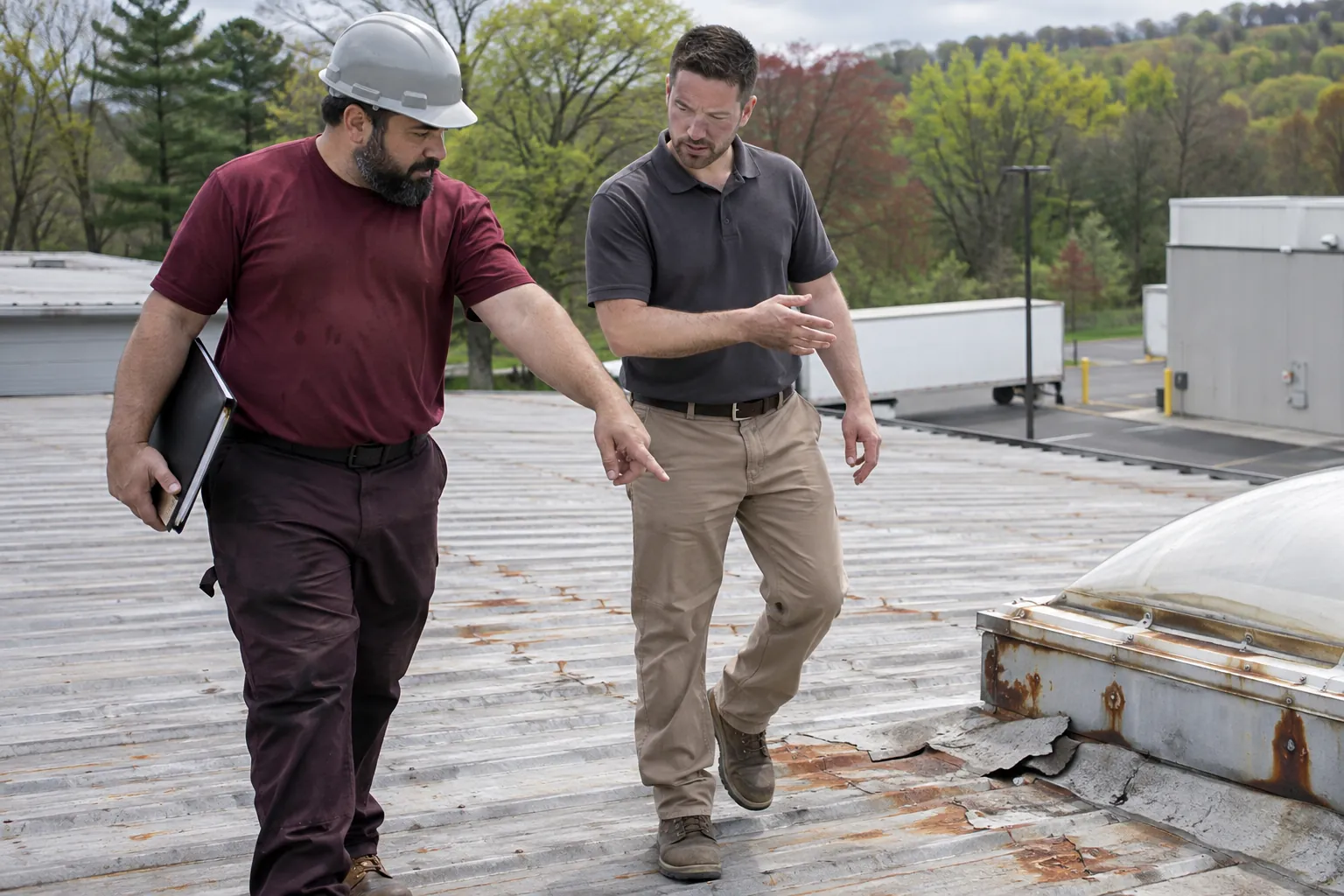
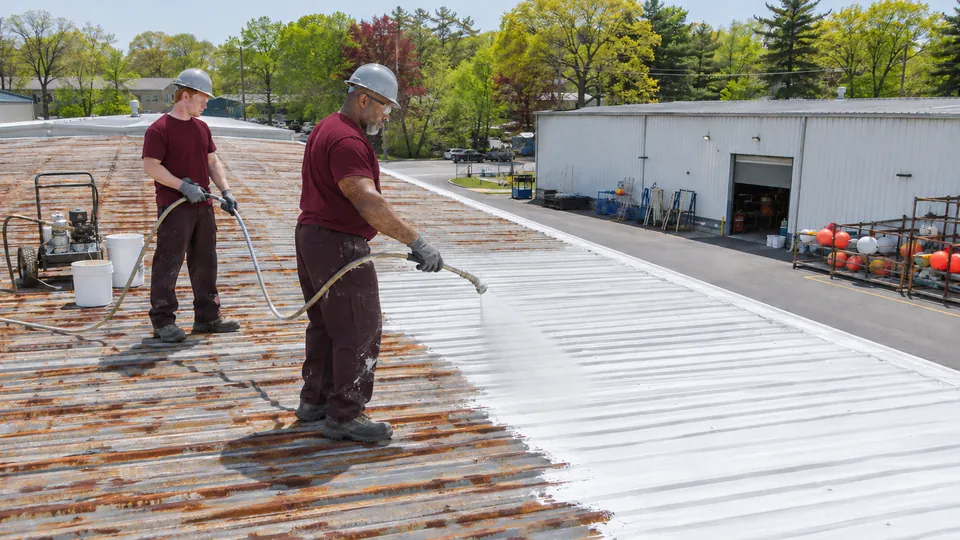
We clean the metal panels, treat rust, seal seams and fastener rows, and spray or roll a fluid-applied coating over the whole roof. The coating cures into one continuous membrane that sheds water and slows corrosion. On Bridgeport warehouses and shops we inspect first to confirm the panels and purlins are sound enough to coat, because a coating seals a roof but does not straighten bent or rotted metal.
Can you coat a rusted metal roof on a Bridgeport warehouse?
Yes, when the rust is on the surface and the panels still hold a fastener. We remove loose scale, apply a rust-inhibiting primer, and seal the seams before the topcoat goes on. Panels rusted through, with holes or soft spots, are replaced first. A warehouse roof near Bridgeport Harbor usually needs more prep than an inland roof, because salt keeps surface rust active.
How do you coat an exposed-fastener metal roof in Bridgeport?
We start at the fasteners, because they leak first. Loose or stripped screws are swapped for larger-diameter ones, and each head gets sealant or a coating-compatible cap. Side laps and end laps get seam tape or a brushed base coat, then the field coat goes over everything. The fastener rows end up sealed under the membrane instead of sitting open to Bridgeport rain and wind.
Should a Bridgeport building owner choose silicone or acrylic for a metal roof?
Silicone usually suits low-slope metal roofs that hold water in spots, because it resists ponding. Acrylic suits steeper metal roofs that drain fast and see a lot of sun. On the Bridgeport shoreline we also weigh salt exposure, how dirty the roof gets, and whether a later recoat will be silicone over silicone, since few products bond to cured silicone except more silicone.
What are the downsides of silicone roof coating on a Connecticut metal roof?
Silicone picks up dirt, which can dull its white surface over time, and it is slippery when wet. It also limits later options: once a roof is coated in silicone, most recoats must be silicone too. Silicone tears more easily than some systems under foot traffic, so we add walk pads at rooftop units on Bridgeport buildings that get regular service visits.
How many coats of silicone go on a Bridgeport metal roof?
Most metal roofs get a base layer at seams and fasteners, then one or two field coats to reach the dry thickness the manufacturer specifies, measured in mils. The count depends on the product, the spray rig, and how rough the panels are. We check wet thickness with a gauge as we go, so the finished membrane meets the spec across the whole roof.
What are the downsides of acrylic roof coating in Connecticut weather?
Acrylic is water-based, so it needs dry weather and temperatures above the product's minimum to cure; a cold, damp Connecticut fall day can stop the work. Acrylic also does not hold up to standing water the way silicone does. It is a good fit for sloped metal roofs that drain well, and a poor fit for low spots that pond after a nor'easter.
Does acrylic coating work on metal roofs in Bridgeport?
Yes. Acrylic bonds well to clean, primed metal and reflects sunlight, which helps on Bridgeport warehouses with dark panels. It works best on roofs with enough slope to drain within a day or two of rain. Rust is treated and primed first, and seams and fasteners are sealed with a compatible acrylic base coat before the field coats go on.
Will spray foam stop leaks in a Bridgeport metal roof?
Spray foam can stop leaks across a metal roof because it fills seams, laps, and fastener rows in one continuous layer. The foam is sprayed over the cleaned panels, then covered with a protective coating, since foam breaks down in sunlight without it. It also adds insulation. Panels that are rusted through or structurally weak still need repair before foam goes on.
Do you coat shingle roofs on Bridgeport commercial buildings?
Yes. Some Bridgeport offices, churches, and mixed-use buildings carry asphalt shingles on a sloped section. We clean the shingles, replace missing or curled tabs, seal the flashing, and apply a coating rated for asphalt shingles. Coating suits shingles that still lie flat and hold their granules. Brittle, cupped, or bare shingles are usually past the point where a coating helps.