Bridgeport Spray Foam Roofing Contractor
Insulating Foam That Buries Every Fastener Row
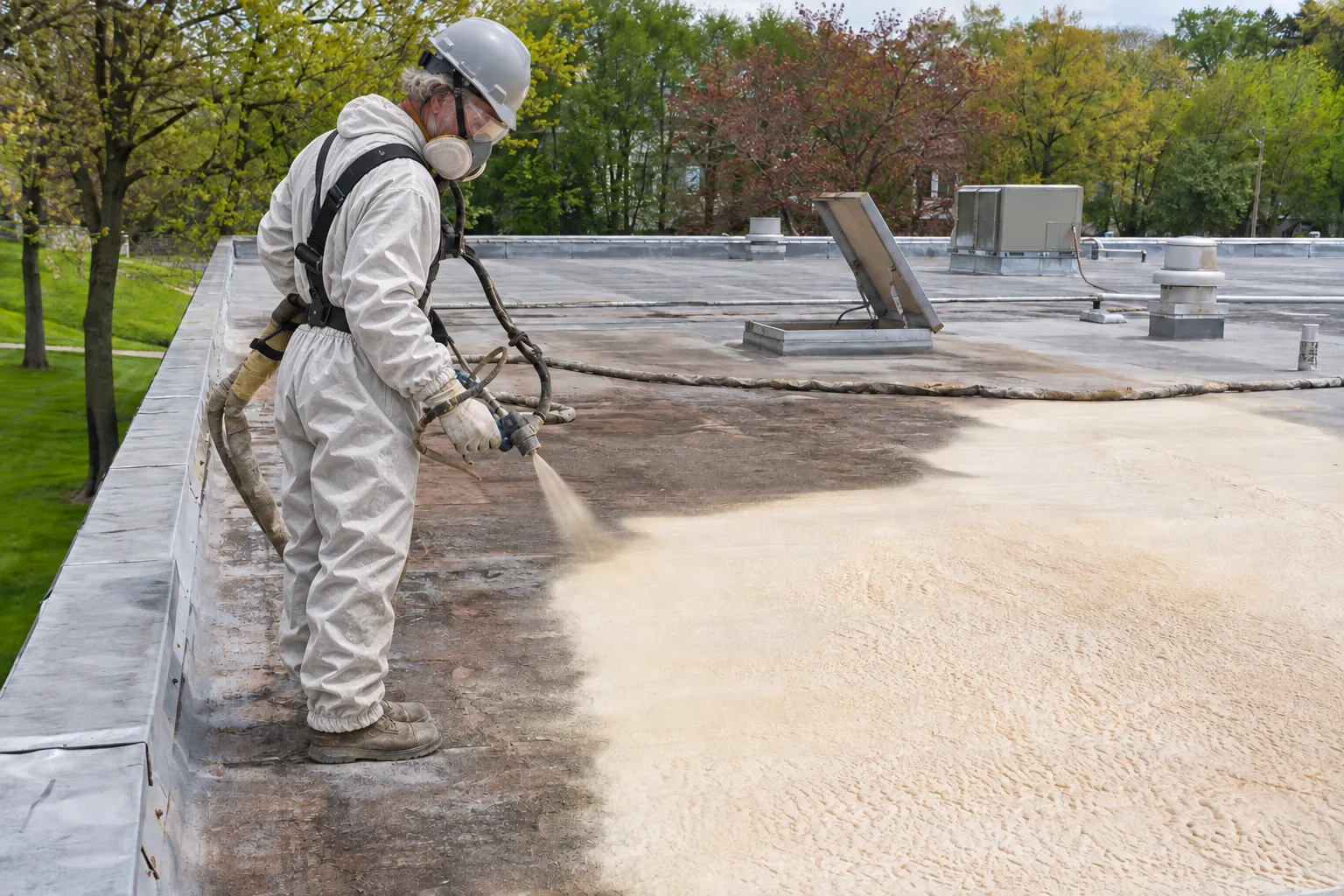
Bridgeport spray foam roofing adds insulation and a new surface in one job, sprayed over cleaned metal or flat roofs and sealed with a protective topcoat.
- Adds InsulationThickness set to the building
- Buries ScrewsRibs and laps filled
- Topcoat SealedShields foam from sunlight
Is Bridgeport Spray Foam Roofing Right for Your Building?
Bridgeport spray foam roofing needs a dry, firm surface to stick to. Compare these points with your roof.
| Roof Detail | Ready to Coat | Fix First |
|---|---|---|
| Structure | Firm panels and purlins | Rust-through or weak framing |
| Moisture | Dry deck and insulation | Wet areas that need cutting out |
| Surface | Cleaned metal or old membrane | Loose gravel or peeling coatings |
| Equipment | Units and intakes that can be masked | Intakes that must run during spraying |
| Goal | Insulation plus a new surface | Only a few leaking screws |
Spray Foam Roofing Answers for Bridgeport Roof Problems
Foam earns its cost on roofs with more than one problem. These are the cases we see in the city.
- Fasteners
Hundreds of Leaking Screws
Old exposed-fastener roofs leak in dozens of places at once. Foam covers every screw head in a single pass. Gutters and edge trim get foam stops so the edges finish clean.
- Comfort
Hot Summers, Cold Winters Inside
Uninsulated steel buildings swing hard with the weather. Foam adds an insulating layer right on the roof. Thicker foam adds more insulating value along with more material cost.
- Drainage
Flat Spots That Hold Water
Foam can be sprayed thicker in low areas to build slope toward drains during the same job. Tapered passes move water toward drains without changing the deck.
- Laps
Rib and Lap Gaps
Corrugated ribs leave open channels at the eaves and laps. Foam fills those voids instead of bridging them. Filled ribs also stop wind from lifting the panel edges at the eaves.
Commercial Roof Coating Options for Bridgeport
Foam competes with two coatings on most metal roofs in the city. Here is the trade.
| System | Insulation | Fastener Rows | Upkeep |
|---|---|---|---|
| Spray Foam | Adds insulation by thickness | Buried under foam | Topcoat recoated over time |
| Silicone | None added | Sealed under the membrane | Silicone recoats |
| Acrylic | None added | Sealed with fabric and coat | Acrylic recoats |
Benefits of Coating Your Roof
Foam stacks several gains in one roof. Here is what changes.
Insulation on Top
Foam adds insulating value without opening the ceiling or the walls. The insulating layer sits outside the deck, where it does the most good.
Every Screw Covered
Screw heads and laps disappear under one continuous layer of foam. Foam also stops wind from getting under loose rib ends at the eaves.
Slope Built In
Extra foam in low spots helps water move toward drains. Drains see water sooner instead of after it sits for days.
Building Stays Open
Crews spray the roof from above while work inside continues. Offices and stock below stay dry and in place through the job.
Too Many Leaking Screws to Chase One by One?
Foam covers them all at once and adds insulation. Get a ballpark figure, then we check the deck and the structure.
Spray Foam Roofing Steps on Bridgeport Roofs
Foam sticks only to a dry, clean roof. These steps protect the bond and the building.
What We Check Before Foam
- Moisture in the deck and insulation
- Firmness of panels and purlins
- Air intakes that need masking
- Drain locations for added slope
- Wind forecast for overspray
Inspect Your Roof
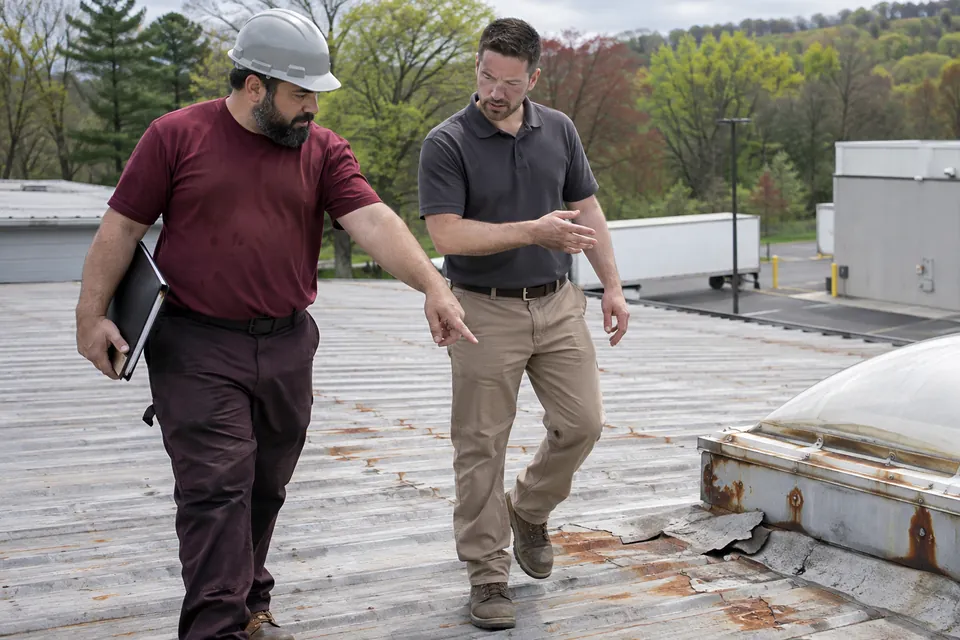
The deck is checked for moisture, panels and purlins for strength, and rooftop intakes are marked so they can be shut down and masked. Deck moisture readings are logged so wet areas get cut out before spraying.
Clean and Fasten
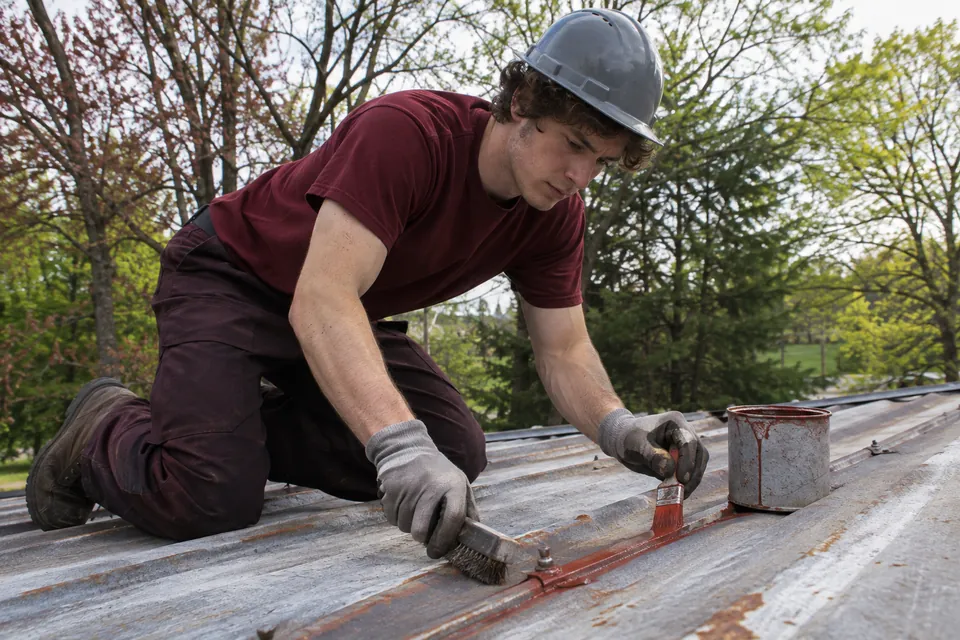
Panels are washed, loose sheets refastened, and rust treated so the foam bonds to a firm, dry surface. Loose sheets left in place would let the foam flex and crack, so every sheet gets fastened.
Mask and Protect
Intakes, units, walls, and nearby vehicles are covered, and spraying waits for calm wind. Parked cars near the building get moved or covered before the rig starts.
Spray the Foam
Foam goes on in passes to the planned thickness, built up a bit more in low spots that need slope. Thickness is checked with a probe as each pass cures.
Seal With Topcoat
A protective topcoat goes over the foam the same week, since sunlight breaks down bare foam. Granules can be broadcast into the topcoat on walk paths for better footing.
Other Systems for Bridgeport Metal Roofs
If foam is more than the roof needs, one of these fits.
Commercial Metal Roof Coating
Steel roofs that only need rust work and sealed laps take our metal coating system.
See commercial metal roof coating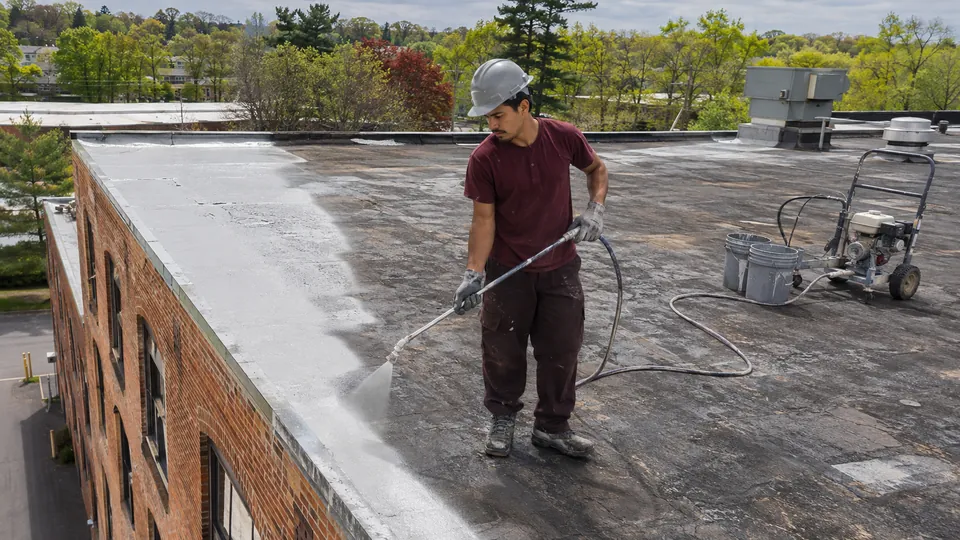
Silicone Roof Coating
Low spots without an insulation need can take silicone alone.
See silicone roof coating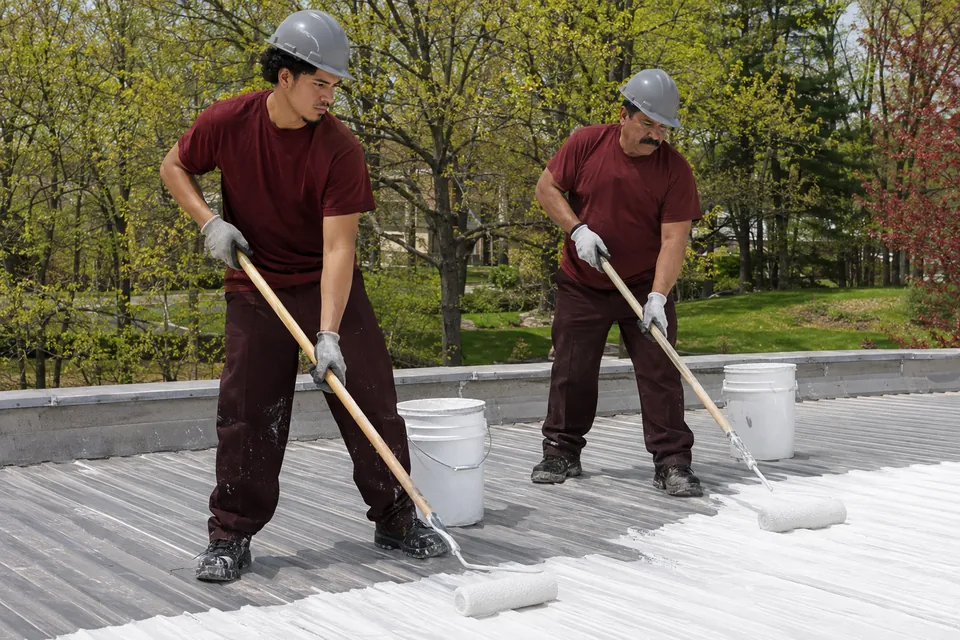
Acrylic Roof Coating
Pitched panels that drain well can take a bright acrylic coat.
See acrylic roof coating
Spray Foam Roofing Questions From Bridgeport Owners
Answers on cost, leaks, and upkeep for foam roofs.
What is spray foam roofing cost per square foot?
Coating work runs about $2.50 to $4.00 per square foot and replacement about $5 to $8 as ballparks; foam pricing depends heavily on thickness. Thicker foam uses more material and spray time, and prep, the topcoat, edges, and rooftop equipment add to it.
Will spray foam stop leaks in a metal roof?
It covers laps, ribs, and fastener rows in one continuous layer, which closes the paths water uses. Panels rusted through or weak framing get repaired first, since foam adds no strength.
How long does a spray foam roof last?
Foam holds up as long as its topcoat shields it from sun and water. Hail dings and dropped-tool punctures get patched early, and drainage and thickness play a part too.
What does spray foam roof recoating involve?
The topcoat wears with weather and foot traffic. It is cleaned, any damage is patched, and a fresh topcoat goes on, while the foam underneath stays in place.
Can foam go over an old metal roof?
Over firm panels and structure, foam goes straight onto the cleaned ribs after loose sheets are fastened and rust is treated. It levels the surface and buries the screws before the topcoat.
Does spray foam add insulation to an uninsulated metal building?
Insulating value goes on top of the panels with foam, which helps steel buildings that swing hot and cold with the weather. The thickness sprayed is set by how much insulation the building needs and the drainage the roof needs.
Can spray foam go on in cold weather?
Dry roofs and temperatures within the product range are needed, so most foam work runs from late spring into early fall. Wind matters too, since calm days keep overspray off cars and nearby buildings.
What happens to rooftop units during foam spraying?
Units near the spray area are shut down and their intakes masked so overspray stays out of the air system. Curbs are foamed up to and around, then sealed with the topcoat, and the units come back on once the area is clear.
Hire a Bridgeport Spray Foam Roofing Contractor
Get the free ballpark estimate, or call to have the deck and structure checked for foam.