Bridgeport Silicone Roof Coating Contractor
A Moisture-Proof Skin for Low Spots That Hold Water
Bridgeport silicone roof coating suits low-slope metal and flat roofs that pond near drains, built up in coats to the mil thickness the product calls for.
- Handles PondingLow spots near drains
- Mils MeasuredWet-film gauge as we go
- Walk PadsAt units with service visits
Is Your Roof a Fit for Bridgeport Silicone Roof Coating?
Bridgeport silicone roof coating works best where water lingers and the surface underneath is dry and clean. Check these details first.
| Roof Detail | Ready to Coat | Fix First |
|---|---|---|
| Slope | Low slope with a few ponding spots | Large dished areas that need drainage work |
| Surface | Clean steel, aged coating, or single-ply | Loose old coating that peels by hand |
| Moisture | Dry insulation under the deck | Wet insulation found by probe or core |
| Drains | Clear drains and scuppers | Clogged or broken drain bodies |
| Traffic | Light foot traffic, or walk pads added | Daily traffic paths with no pads planned |
Roof Conditions Silicone Roof Coating Handles in Bridgeport
Silicone earns its place on roofs where water sits after rain or snowmelt. These are the conditions we see most.
- Ponding
Water Standing Near Drains
Flat stretches around drains hold water for a day or more after a storm. Silicone keeps its bond under that standing water better than most coatings. Drains get cleared and checked for cracked bodies at the same visit.
- Snowmelt
Meltwater Trapped by Ice Dams
Late-winter melt backs up behind ice at the roof edge. A silicone membrane keeps that slow water out of laps and screw holes. A heat cable or added drain is sometimes the fix for an edge that ices up every year.
- Seams
Low-Slope Laps That Weep
Shallow pitch lets water sit against laps long enough to wick in. Laps get a silicone base layer before the field coats. That base layer is wider than the lap so the field coat bridges it cleanly.
- Old Coating
Chalky Aged Coating
Weathered coatings chalk and thin out. After washing and an adhesion test, silicone can go right over many of them. Peeling spots get scraped back to a firm edge before any test patch goes down.
Commercial Roof Coating Options for Bridgeport
Silicone is one of three coatings for low and moderate slopes in the city. Here is how it stacks up.
| System | Ponding | Cure Window | Later Recoat |
|---|---|---|---|
| Silicone | Tolerates standing water | Cooler, damper days are workable | Silicone only |
| Acrylic | Struggles with standing water | Needs warm, dry weather | More acrylic |
| Spray Foam | Sloped to drain during spraying | Dry roof and mild temperatures | New topcoat over foam |
Benefits of Coating Your Roof
Silicone is chosen for one main reason, water that stays put. These are the gains that come with it.
Water-Resistant Skin
A cured silicone membrane keeps its grip where water sits after storms.
Reflective Finish
White silicone reflects summer sun off dark steel and old membranes.
Longer Work Season
Silicone tolerates cooler, damper days than acrylic at the edges of the season.
Laps Under One Layer
Seams and screw heads sit under a continuous membrane instead of old sealant.
Water Still Sitting on the Roof Two Days Later?
Ponding is the job silicone was made for. Get a ballpark figure for your roof, then we check drains and decking on site.
How Silicone Roof Coating Goes On in Bridgeport
Silicone rewards clean, dry prep. The order below keeps the bond tight where water sits.
What We Check Before Silicone
- Where water stands after rain
- Drain bodies and scupper openings
- Moisture in the insulation
- Adhesion of any old coating
- Traffic paths to rooftop units
Inspect Your Roof
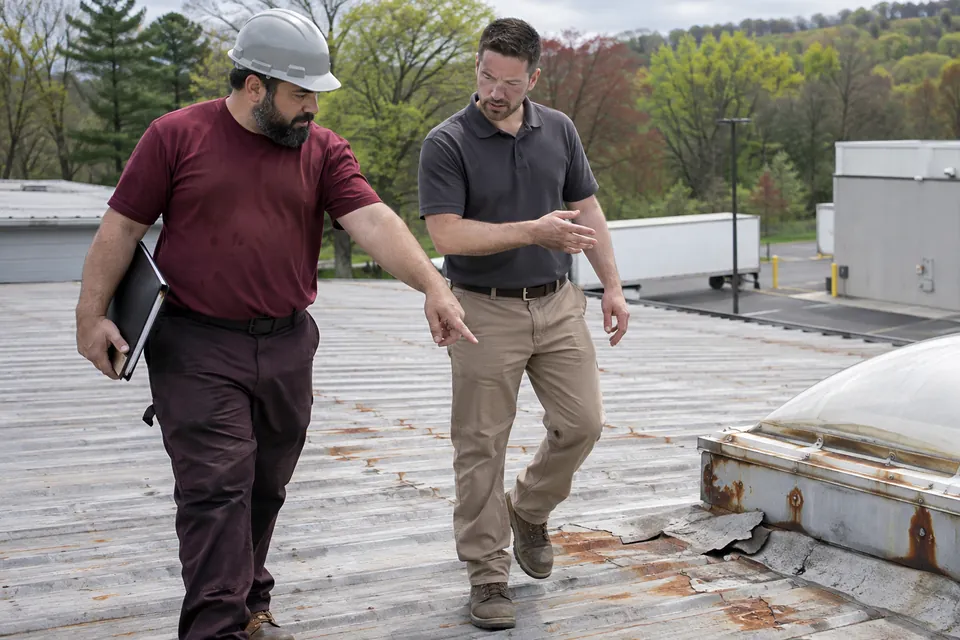
Ponding spots are marked, drains are checked, and suspect areas are probed for wet insulation before any product is chosen. Photos of each ponding spot go into your roof file for later comparison.
Clean and Test
The roof is washed, and test patches confirm silicone bonds to the existing surface. Bleed-prone surfaces get a primer. Primer type follows the existing surface, whether bare steel, old coating, or single-ply.
Base Layer at Details
Seams, screw heads, and flashing get a reinforced silicone base layer so the field coat has no weak edges. Fabric goes into the base layer at curbs, drains, and pipe boots.
Field Coats to Spec
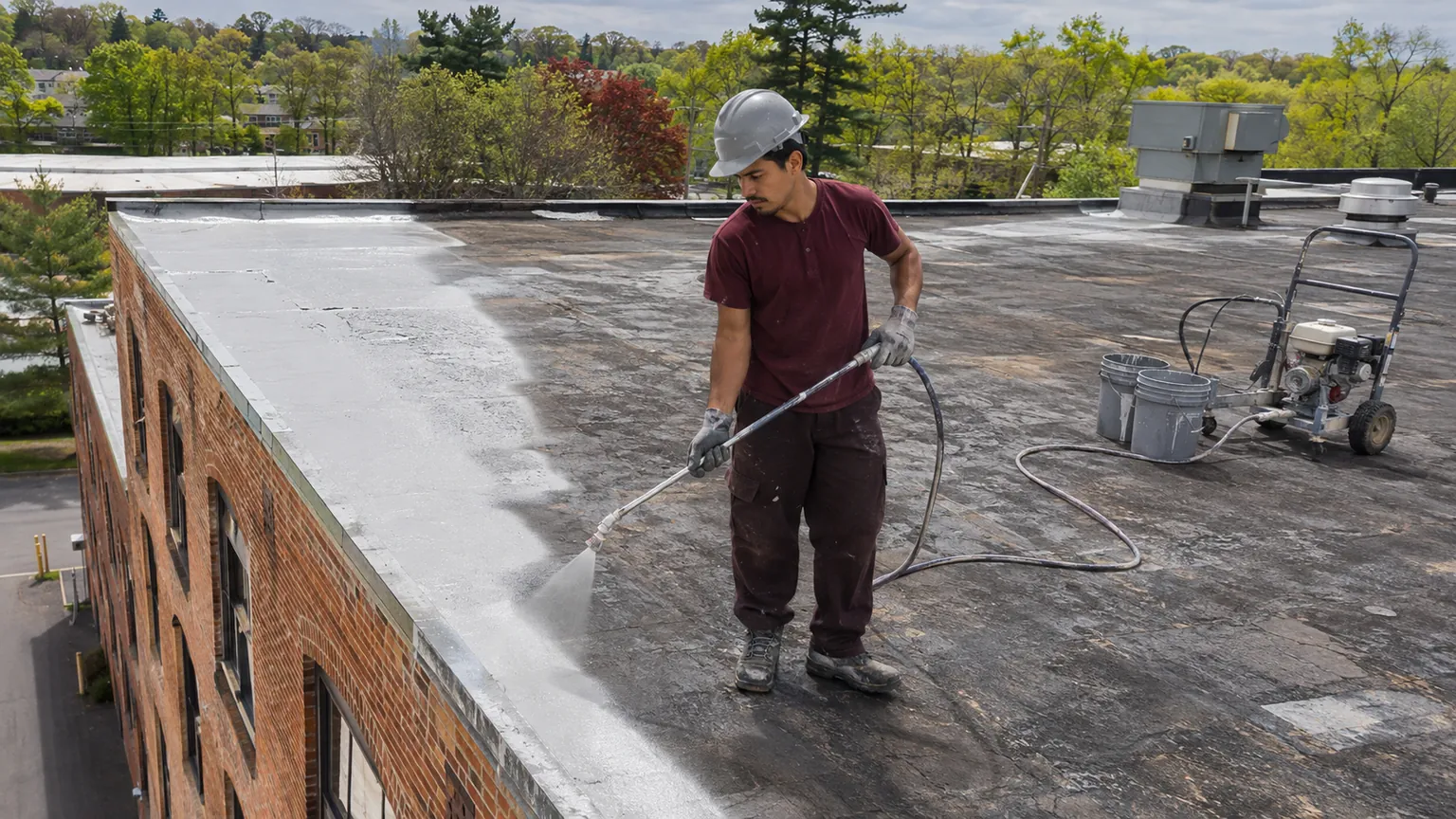
One or two field coats are sprayed to the dry mil thickness on the product sheet, with wet-film readings taken as the crew moves. Readings are taken on a grid so no corner of the roof is left thin.
Pads and Final Walk
Walk pads go down on service paths to rooftop units, and the roof is walked for thin spots before sign-off. Pads follow the routes service techs actually use to reach each unit.
Other Systems for Bridgeport Low-Slope Roofs
When silicone is not the best match, these systems come next.
Commercial Metal Roof Coating
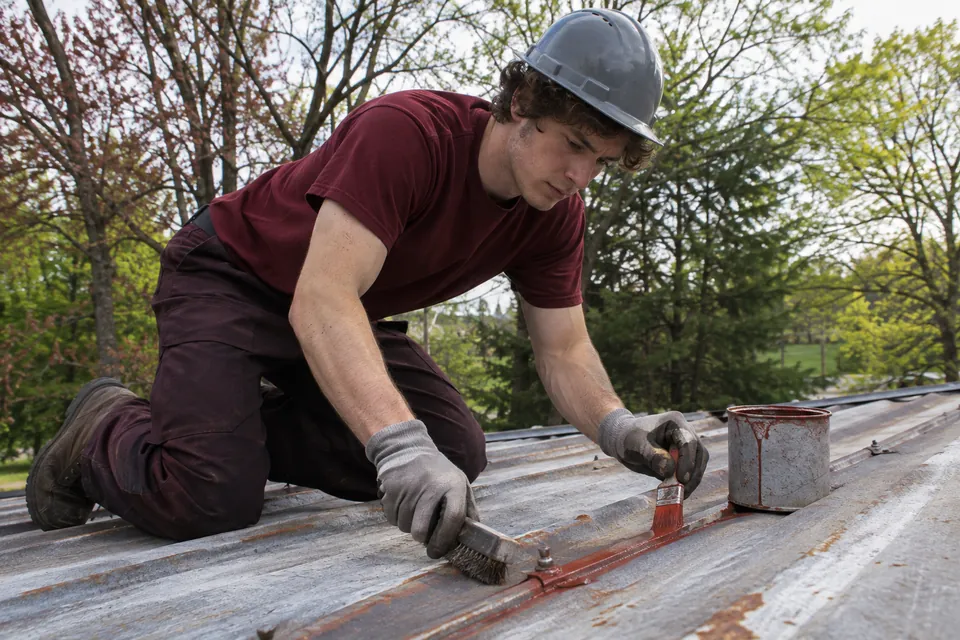
Corrugated steel with heavy rust and loose screws starts with our full metal coating system.
See commercial metal roof coating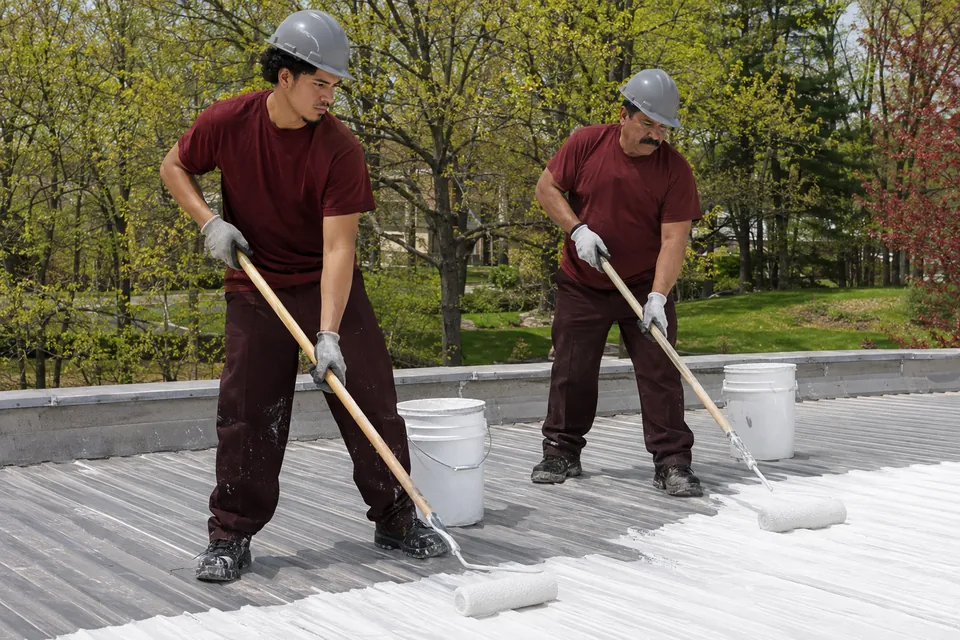
Acrylic Roof Coating
Pitched panels that drain within a day often suit an acrylic coat better than silicone.
See acrylic roof coating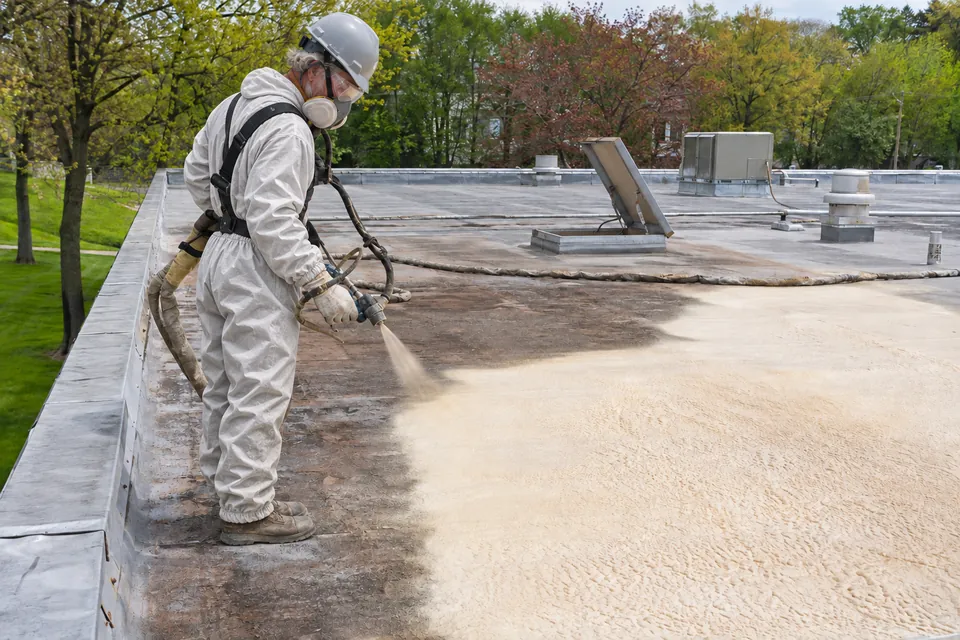
Spray Foam Roofing
Roofs that need insulation and slope correction can take foam with a silicone topcoat.
See spray foam roofing
Silicone Roof Coating Questions From Bridgeport Owners
What owners ask about silicone before choosing it.
What is silicone roof coating cost on a commercial roof?
Silicone falls inside the coating ballpark of about $2.50 to $4.00 per square foot of roof area. Mil thickness, primer needs, detail work at seams and units, and access decide where a roof lands, and the on-site visit sets the final number.
What are the downsides of silicone roof coating?
Dirt sticks to it and can dull the white surface, and it is slick when wet. Recoats are limited to more silicone, and heavy foot traffic can tear it, so walk pads go in at units that get regular service.
How many coats of silicone roof coating go on?
Most roofs get a base layer at seams and fasteners, then one or two field coats. The count follows the product, the spray rig, and how rough the surface is, all aimed at the specified dry thickness.
How long does silicone roof coating last on a low-slope roof?
Thickness, adhesion, and wear decide it. A full mil spec over clean, dry panels lasts longer; thin spots, dirt, and traffic shorten it. When it wears thin, more silicone goes on after a cleaning.
Can silicone go on in a Connecticut spring or fall?
Cooler, damper days are easier on silicone than on acrylic, which stretches the season at both ends. Dew point and the forecast still get watched, since frost or rain on a fresh coat spoils the cure.
Does silicone work on single-ply membranes as well as metal?
Many aged single-ply roofs take silicone after cleaning and a primer matched to the membrane. Loose seams and wet insulation get repaired first, and a test patch confirms adhesion before the full roof is coated.
How do you keep silicone clean on a roof near the harbor?
Salt film and dirt build up faster near the water. A rinse during routine roof checks keeps the surface bright, and walk pads keep foot traffic from grinding grit into the coat around units.
Hire a Bridgeport Silicone Roof Coating Contractor
Get the free ballpark estimate for your roof, or call to have the ponding spots walked and measured.